
Where Can I Find Cheap Warehouse Space For Rent?
Finding the right warehouse space is a challenge even under the best of circumstances. Finding the right warehouse at the right price is even more of a challenge. But no-one ever became successful without conquering a challenge or two. Here’s a quick primer on finding cheap warehouse space for rent.
“Cheap” is Not the Same as “Desirable”
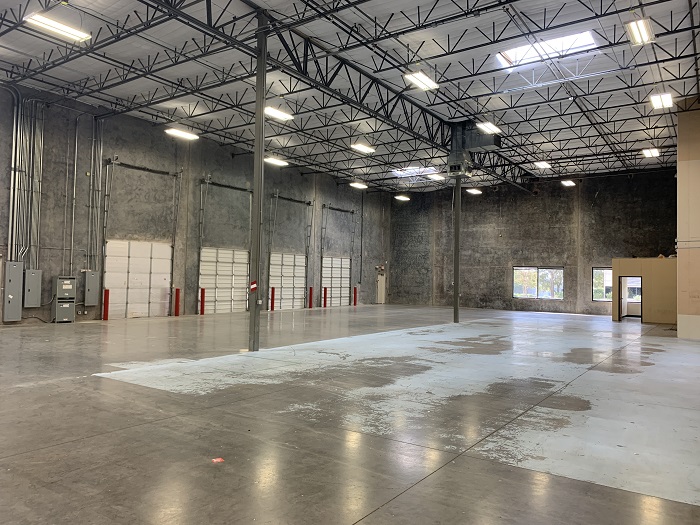
At first blush, warehouse space might seem like it should be a cheap investment. Indeed, it can be. But cheap warehouse space is oftentimes not good enough. For instance, do you need HVAC? A secure location? A sturdy, concrete building? Any of those features are going to cost extra. Most cheap warehouses are metal buildings with no climate control and minimal, if any, security.
Another major consideration is location. Cheap warehouse spaces tend to be out of the way, which can make deliveries a challenge. You’ll pay more if you want to be near an airport, highway, or rail terminal.
For instance, in Austin, most of the nicer warehouses are located near highways, where it’s easy for 18-wheelers to make quick deliveries. If you choose a more far flung location, it can actually cost more in the long run. The money you save on rent will instead be spent on higher delivery fees. That said, there’s no one, universal sweet spot in the balance of price vs. easy access. A lot depends on how — and how often — you receive shipments.
There’s also another advantage to having a nicer warehouse; it shows a better image to your customers. This isn’t an issue if there are never customers in your warehouse. But if your warehouse is also going to be a place where you do business, do you really want to invite your customers to a cheap metal building in a marginal neighborhood? Far better to invest in a concrete, tilt-wall building that’s close to the airport and has on-site security.
Finding the Right Warehouse Space
These days, you don’t have to drive around looking for “For Rent” signs to find a warehouse space. You can open an online service from your home or office, and find several options. You can also use these databases to compare prices, but take anything you see with a grain of salt. Oftentimes, the information is outdated or flat-out inaccurate. Another good place to look is your local newspaper. Classified ads aren’t what they used to be, but some landlords still post them.
Once you’ve got a list of properties, it’s time to go visit them. Oftentimes, you’ll fall in love with one space, and be tempted to sign a lease right then and there. Don’t. Instead, wait until you’ve found two or three potential candidates. This way, you can make a more objective analysis. Moreover, you’ll have more options if the deal on your first choice falls through.
Negotiating the Best Deal
Warehouse space is like any other kind of real estate: you can expect to do some haggling. That said, unless you’re an expert on the commercial real estate market, it can be tough to determine what’s a fair price. For this reason, many tenants hire a broker or tenant representative to do their negotiating for them.
A broker or tenant rep is like a real estate agent for renters. They help you out with the entire process, from finding a location to negotiating the deal to handling all the paperwork. With a good tenant rep, you’ll spend minimal time hunting for warehouse space, and more time running your business.
A tenant rep will know different landlords throughout the city, and which ones are easiest to negotiate with. They’ll also often have knowledge of spaces that aren’t advertised to the general public. Many landlords don’t bother advertising. They already have plenty of demand, and get new tenants from brokers or reps. If you’re hunting for a location on your own, you won’t even know these spaces exist.
What to Look For in a Warehouse Space
The first question you’ll have to ask yourself is why you’re using the warehouse space. For instance, if you’re storing a bunch of ceramic tile, most spaces will do. But if you’re storing electronics, you’re going to want a climate-controlled space.
Next, you’ll need to consider location. Do you want to be close to the highway? Near another business? The airport? Your home? Similarly, a congested area can be harder to deliver to, but will also be closer to more other businesses.
When thinking about location, you’ll also need to consider zoning. Depending on the nature of your business, you may be limited to certain areas of the city. Never rely on a chart or a website for zoning information. Call the local zoning office and speak with a real human being.
The building design and layout are also important. If you have employees permanently working in the space, you’re going to need a restroom. Similarly, if you need to accept deliveries from 18-wheelers, you’ll want a warehouse with a proper loading dock.
Finally, consider whether you expect to be upsizing or downsizing in the near future. If so, you’ll want to sign a shorter lease. If not, you can often get a better deal by signing a longer lease.
What Does Warehouse Space Cost in Austin, Texas?
Now that we’ve talked about the reasons for different rental rates, we can get a little bit more specific. Austin is a big city and, as you might expect, there’s some variation between different neighborhoods. In general, there are three submarkets in the Austin area. These are the North, the Northeast, and the Southeast.
Let’s take a quick look at each of them. Keep in mind that these are general price ranges, and individual locations may vary. In addition, these are ranges for direct rentals. If you’re subletting or have another unusual situation, your rates can be wildly different.
The North is the area of Austin north of US-183, bounded by the MoPac Expressway to the west and IH-35 to the east, and extending north to State Highway 45. In the past, the North market was dominated by larger design warehouses and showrooms. Rates were relatively low, so these large showrooms proliferated.
Recently, more commercial and restaurant businesses have moved into the area around The Domain. This in turn led to an influx of tech workers, and has driven up demand for flex office space. This demand has put pressure on warehouse rates, making the North Austin’s second-most expensive submarket. Larger warehouse space have base rental rates that average $0.65 to $0.85 sf per month while smaller flex offices will have base rental rates ranging from $0.90 to $1.40 per square foot per month. Triple Nets are going to range from $0.25 to $0.40 sf/mo
The Northeast is the area north of US-290, east of IH-35, and out to the southern border of Pflugerville. Most industrial space in this area is clustered around the junction of US-290 and IH-35. This area is used by a lot of distribution companies, because of its easy highway access. It also provides direct routes to other major cities, including Dallas and San Antonio.
Much of the space is used for incoming goods as well as outgoing. Suppliers for Dell, Samsung, and Applied Materials maintain a lot of warehouses here. That said, because this is an industrial area, prices remain lower than in other submarkets. The average Northeast bulk warehouse space costs $0.65 to $0.80 per square foot per month. Smaller warehouse flex properties will have higher base rates $0.85 to $1.30. NNN will average $0.30 to $0.40 sf / mo.
The Southeast submarket is located south of the river, north of the 45 toll road, and east of IH-35. Basically, it’s the area around Austin Bergstrom International Airport. This location doesn’t just provide easy airport access. It’s also close to downtown, and has easy access to the western suburbs via the Highway 71 flyover.
All of these attributes have attracted a variety of tenants, including both local and national companies. Bulk warehouse space base rates average $0.65 to $0.85 sf / mo. If you need 100% hvac then expect to pay on the higher end. Smaller warehouse or flex offices will cost $0.85 to $1.30 sf / mo. Triple Net costs will range from $0.38 to $0.60 sf/mo.