
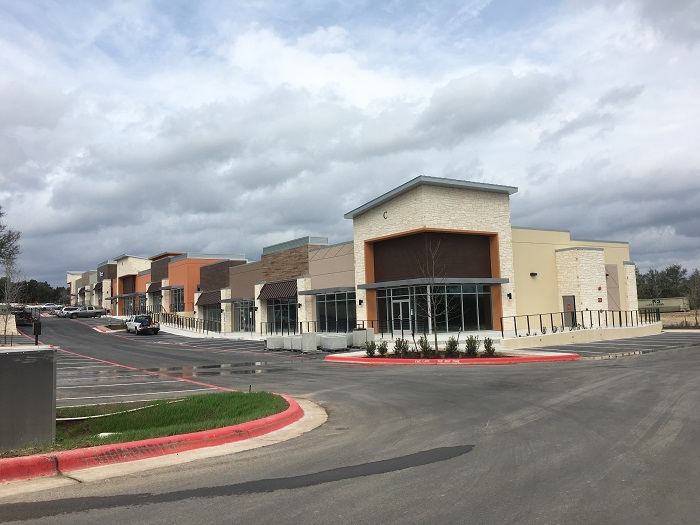
If you’re looking for cheap retail space, you’ve got to be careful. If one space costs less than another with similar square footage, ask yourself why. Almost invariably, you’ll find an undesirable location, older building, outdated infrastructure, or a weird tenant mix.
That said, there is definitely such a thing as a diamond in the rough. You can find good, cheap retail space for rent. It just takes patience, an understanding of commercial rentals, and the right negotiating skills.
So, you’re looking for cheap space. Everyone knows the golden rule of location, location, location, but what else should you be looking for? Here’s a short guide.
NNN: The Most Common Retail Lease
If you’ve reviewed any rental listings, you’ve probably seen leases described as “NNN”. These N’s are an abbreviation for the term “triple net,” which represents a triple net lease. “Triple,” in turn, refers to three types of expense: property taxes, building insurance, and maintenance/repair.
Property taxes
Are a non-negotiable part of almost any lease. The reason is straightforward: the tax is a fixed cost that the landlord must pay every year. As a result, the rent must cover property tax at a bare minimum before the landlord can earn any profit whatsoever. This means passing the cost on to their tenants.
Building insurance
is another cost that’s more or less fixed. The neighborhood is the largest factor here, along with the square footage. Regardless, there’s not much the landlord can do about either of these things. In a NNN lease, you pay the insurance. In any other kind of lease, the cost would simply be passed on to you in the form of increased rent.
Common area maintenance
is the stickiest aspect of a NNN lease. On the one hand, it can provide a great value. It covers repair and maintenance of parking lots, landscaping, lobbies, hallways, atriums, shared public restrooms, elevators, escalators, and other on-site amenities.
As you can see, these costs can be very different depending on where you’re leasing. If you’re in a busy shopping mall, all of those expenses can be very costly. However, they can also be worthwhile if they attract more customers to your store. Conversely, maintenance and repair can cost next to nothing at other locations.
It’s also not a fixed cost. For instance, do you want the lot plowed every time it snows, or only if there are at least three inches? Do you really need new seasonal flowers every three months, or will a few perennial shrubs do just fine? These are things that can be negotiated during the leasing process.
Other Types of Retail Lease
While NNN retail leases are the most common kind, they’re by no means the only kind. Many landlords are willing to sign a double net (NN) lease. These are similar to a NNN lease in that the tenant is responsible for property taxes, utilities, and insurance premiums. However, the landlord is responsible for maintenance and repairs.
A single net lease, sometimes called a net lease, is the cheapest type of all. In a single net lease, the tenant pays only for rent, utilities, and property taxes. The landlord is responsible for insurance, maintenance, and repairs. Note that the landlord is responsible for insurance on the building itself. Your business will likely require additional insurance to protect your assets, as well as to protect you from liability.
Any other type of arrangement is referred to as either a modified gross or full-service gross lease. These arrangements split costs as determined by the rental contract itself, typically as a percentage.
How Much Should a Retail Business Pay in Rent?
Exactly how much a business should pay in rent depends on the type of business. For example, a prestigious law firm can pay upwards of 15 percent of their annual income in rent. The high-profile, downtown location is worth it. On the other hand, a low-margin industrial concern will want to pay as little as two percent. For retail, the sweet spot is between five and 10 percent of gross income.
Let’s say your company’s annual sales are a nice round $1 million. If your rent is $8,000 per month, you would multiply that by 12 to get your annual rent ($96,000). Divide that by $1 million and you get 0.96, or 9.6 percent. So it would be on the high end for retail, but not out of the question depending on your clientele and what you’re selling. If you have a NN or N lease, make sure to include maintenance and other costs as “rent” for the purposes of this calculation.
What do You Need to Lease a Retail Space?
Before a landlord is willing to lease to you, they’re typically going to want to see some financial documents. There’s no one hard-and-fast rule as to what type of financial requirements a lease will have. Different individual landlords will have their own individual preferences as to what they want you to provide.
That said, here are the types of documents a landlord will typically want to see.
Credit reports
Your landlord will most likely want to see a credit report from one or more of the major credit bureaus.
Financial statements
The exact type of financial statement will depend on the type of company you run. If it’s a corporation, the landlord will want to see your balance sheet, profits, and losses. They may also want to see your business’ bank balance.
The same will be true for a DBA, except the owner’s information will be required instead. Owner information can also be used in the case of startups that don’t have a business record.
Tax returns
Many landlords will require up to two years of past tax returns. As with financial statements, you’ll need either business or personal records depending on the type of company.
A business plan
For startups, landlords will often want to see a business plan. If you’ve had to put together a business plan for a lender, the same plan should be sufficient.
Bank references – If your business relies on a line of credit for financing, your landlord will want to know how much you’re pre-approved for. The higher the rent, the more credit you’ll need.
Landlord references
If you have an existing business, it can be helpful to get a reference from your current landlord. Be careful about asking for a reference when none is requested, though. You never know what somebody might say about you behind your back.
Negotiating the Lease
Once you understand how leases work and have your paperwork together, it’s time to actually find a location. You could try the classifieds, online listings, or just drive around and write down phone numbers from “for rent” signs.
Or, you could join the 21st century and hire a tenant representative or broker. These professionals have a deep knowledge of the local real estate market. They can often find bargains that aren’t advertised, and can leverage their knowledge of local landlords to get you the best possible rate.
One last thing we should mention is that the duration of the lease will have an effect on the terms you’re able to get. For example, anything shorter than two years is considered a short lease in the retail market. These leases offer the most flexibility, but many landlords don’t offer them. Simply put, a one-year lease takes the same amount of paperwork and negotiating as a five-year lease, and many landlords would rather not deal with the headache.
Medium-term retail leases run from three to five years, and are the most common duration. You’ll often find better deals in this range, since most landlords prefer a medium-term leases. Anything longer than five years would be considered a long-term lease. Many landlords are hesitant to sign a long-term lease with a tenant they’ve never heard of. However, if you can get one, you can often get the best deals of all.